When people say “Solitaire,” they usually mean Klondike. The game uses a standard 52-card deck. You organize seven tableau columns in descending alternating colors while building four foundations from Ace to King in matching suits.
Are Solitaire and Klondike the same game?
Not precisely. Solitaire is a family of single-player card games. Klondike is its most familiar member; Spider, FreeCell, and Pyramid are other solitaire variants. This guide covers the common Klondike rules used by many browser and desktop versions.
What are the four areas of the board?
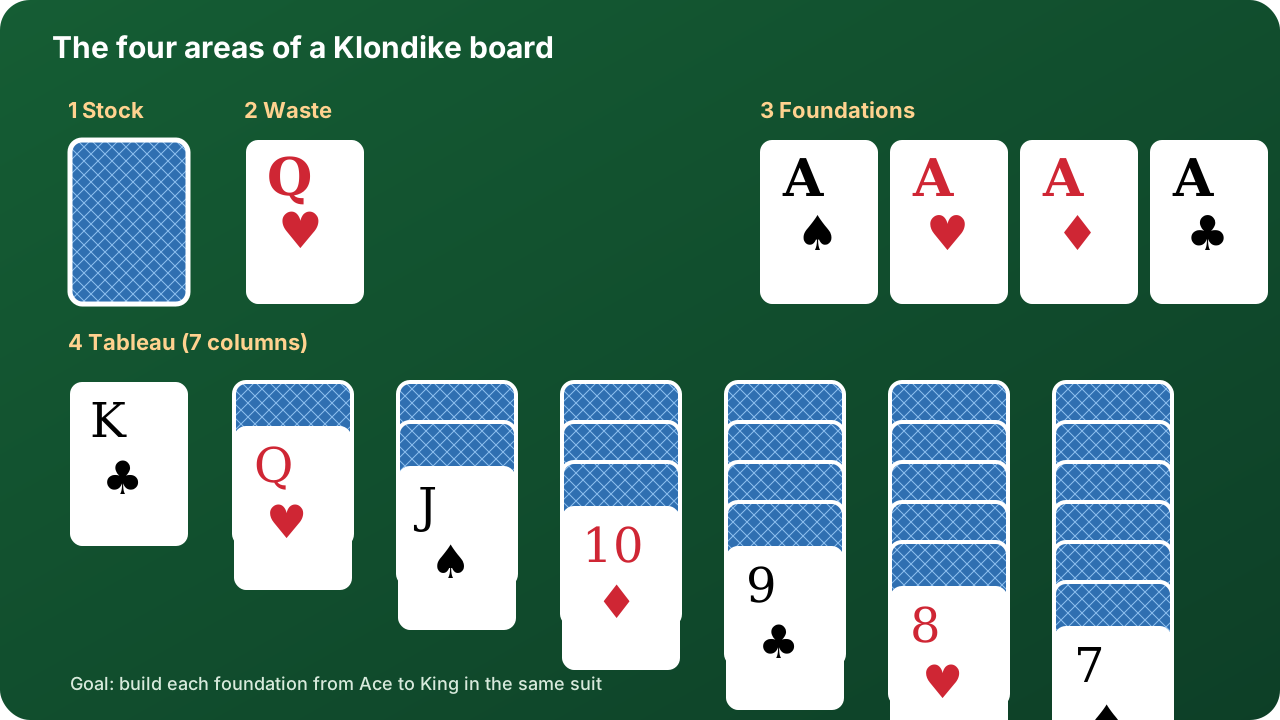
- Tableau: seven central columns where cards build down in alternating colors.
- Foundations: four piles, one per suit, built upward from Ace.
- Stock: cards that were not dealt to the tableau.
- Waste: face-up cards drawn from the stock; normally only the top card is playable.
How do you deal Klondike?
Deal one card to the first column, two to the second, and continue until the seventh column receives seven. Only the top card of each column begins face up. The tableau uses 28 cards and the remaining 24 form the stock. Browser games deal automatically, but the counts explain why exposing face-down cards creates progress.
What moves are legal?
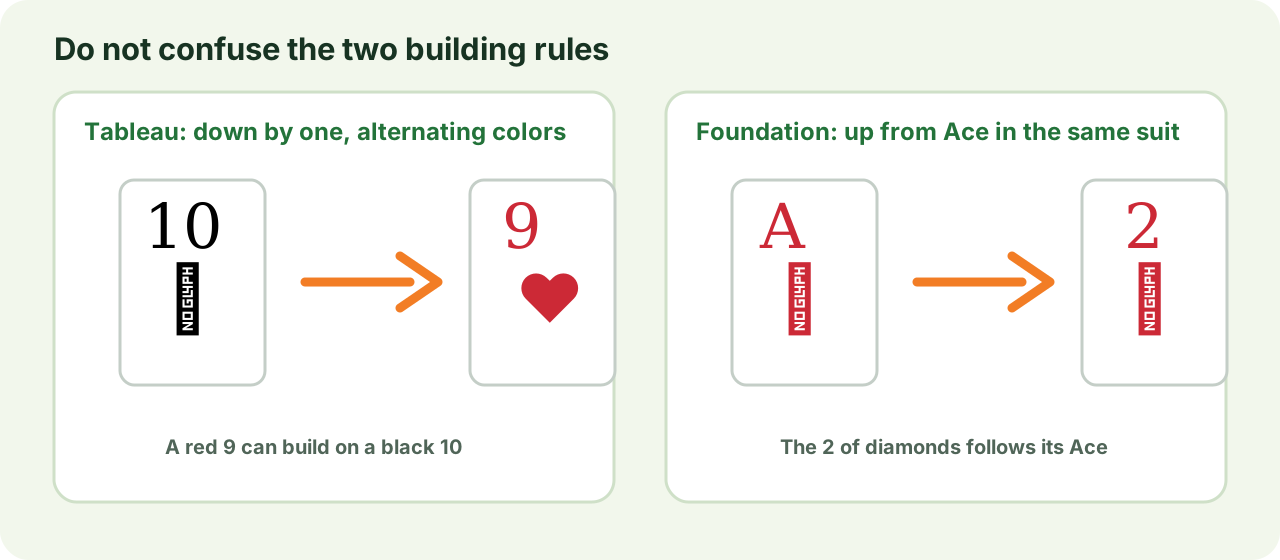
- Build on the tableau: place a card on the opposite color and one rank higher, such as a red 9 on a black 10.
- Move a sequence: transfer a face-up alternating-color descending run when its first card fits the destination.
- Fill an empty column: common Klondike rules accept only a King or a valid sequence beginning with a King.
- Build a foundation: begin with an Ace and continue upward in the same suit.
What order should a beginner follow?
- Scan the visible tableau before drawing from the stock.
- Prefer a move that exposes a face-down card.
- Compare same-rank choices by what each one uncovers.
- Move safe low cards to foundations, but keep cards needed as tableau connectors.
- Create an empty column only when a useful King or King-led sequence is ready.
- When the tableau stalls, draw and remember a few important stock landmarks.
A move is valuable when it increases future choices. Merely making a longer visible sequence may accomplish less than turning one hidden card face up.
What is the difference between draw one and draw three?
Draw-one games expose stock cards one at a time and are easier for learning the tableau. Draw-three games expose only the top card of each group, so using a waste card can change later access. Redeal limits vary by implementation. See the full draw-one versus draw-three comparison.
Which beginner mistakes matter most?
- Sending every available card to a foundation.
- Emptying a column without a useful King ready.
- Building a long visible run instead of exposing a hidden card.
- Cycling the stock without preparing destinations.
- Assuming every game has the same redeal and undo rules.
The seven beginner mistakes guide explains how to correct each one.
How does browser Klondike differ from physical cards?
The core building rules remain familiar, but a browser version may add hints, undo, automatic foundations, scoring, and timers. It may also limit stock passes or prevent foundation cards from returning. Check the current player instead of assuming a feature is universal.
Practice the rules
Open Klondike Solitaire and use the first few deals to count face-down cards exposed rather than focusing only on wins. When no move is obvious, follow the stuck-position checklist to separate an oversight from an earlier poor branch.