How to play
- Tap or drag a card to a legal destination indicated by the game.
- Use temporary spaces to uncover the ranks needed for foundations.
- Check the separate jobs of duplicate cards before moving both copies.
How to play
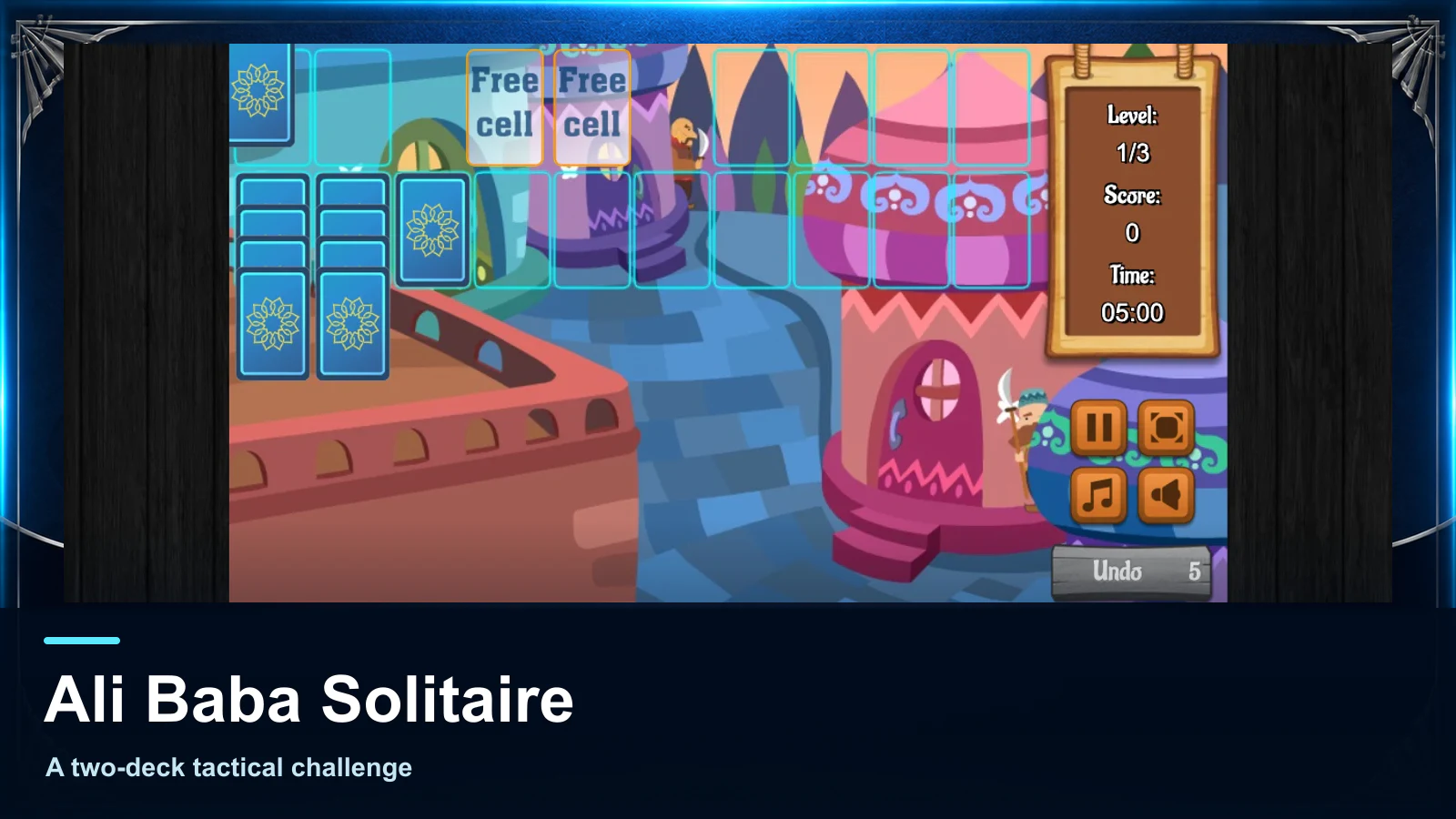
Ali Baba Solitaire presents a large, storybook-style card table built from two decks. Its broad layout invites a different kind of attention from a compact solitaire game: you are constantly comparing routes, receivers, and the duplicated cards that can serve more than one purpose. The board may look busy at first, but it becomes manageable when every move is measured by the card it reveals or the working space it creates.
You do not need to memorize every card at the opening. First find the low ranks that can begin or advance foundations, then note the columns that can be changed immediately. Look for cards that are covering those low ranks. A move is useful when it gives you access to one of them, creates a destination in another area of the board, or frees a temporary working place for the next transfer.
With two decks, the same rank and suit can appear twice. This does not mean both copies should be sent away as soon as possible. One copy can advance a foundation while the other remains a helpful tableau receiver. Before moving both, check whether a visible card depends on that rank as a landing place. Treat duplicates as separate tools with separate jobs, and the large layout starts to offer more routes instead of more confusion.
Low cards reduce the burden on the board, so it helps to trace a route toward them. When an Ace or 2 is covered, identify the cards above it and consider the order in which they can be moved. A transfer that exposes just one useful card may be more valuable than a move that reorganizes several cards without opening anything. Keeping a concrete target prevents the size of the table from becoming overwhelming.
Any temporary storage or open working area should support a plan. Place a card there because its removal exposes a useful rank or allows a receiver to be formed, not simply because there is room. Before filling an open place, decide what will happen next. This habit keeps you from using valuable space on a high card that does not help the rest of the layout.
Later in the game, inspect the next required rank on every foundation and locate its copies on the table. Then remove the blockers in the order that preserves your available destinations. Duplicate cards make it possible to advance one route while holding another open, but only if you keep checking the role of each copy. Patient, target-led play is much stronger than moving cards in the first available order.
Ali Baba is a good next game for players who want a grander board than Classic Solitaire without losing the pleasure of incremental progress. The two-deck structure creates many small choices, and its colorful presentation makes the planning feel like a card-table expedition rather than a routine deal.
One copy may safely advance while the second copy remains useful as a tableau destination.
Choose the move that reveals a low card or creates a clear route for the next transfer.
Loading comments...