How to play
- Tap or drag cards to the legal destinations highlighted by the game.
- Use open spaces to uncover routes through the current layout.
- Follow the objective and prompts for each castle stage.
How to play
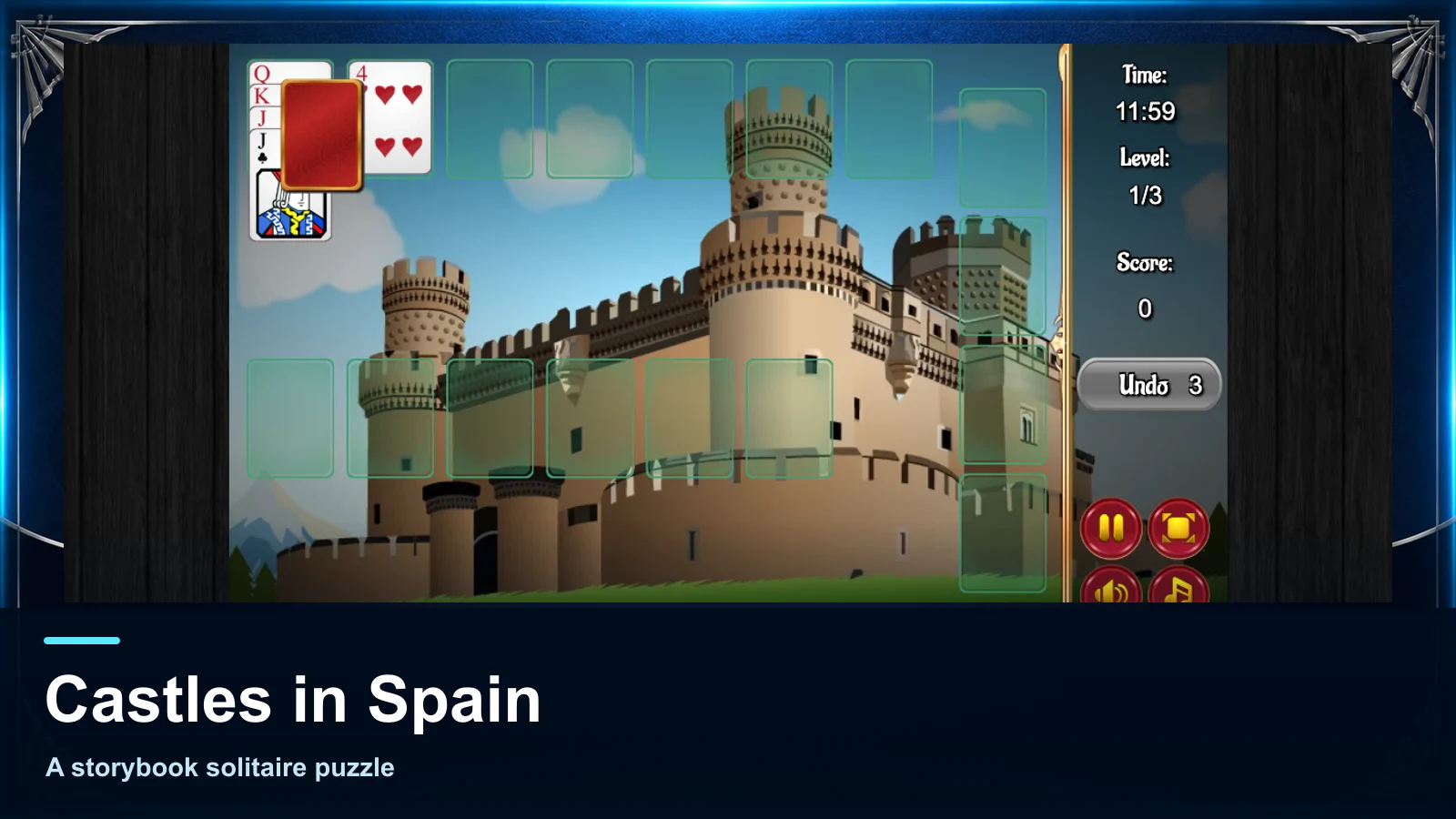
Castles in Spain Solitaire turns each card layout into a small, scenic puzzle. Against its castle backdrop, the important question is not simply which card can move now. It is which move will reveal a new card, create a needed destination, or preserve enough open space for the next step. Each stage has its own arrangement, so a calm read of the table is more useful than trying to repeat a memorized sequence.
At the beginning of a stage, take a moment to notice the available cards, legal destinations, and the cards underneath them. The displayed goal and in-game prompts tell you what the current layout expects. Compare possible moves by the information they uncover. A modest move that exposes a low card or an important receiver is often stronger than a move that merely shifts the visible top cards around.
The best way to choose between two legal moves is to ask what each one reveals. If moving a card opens a useful rank, it can create a chain of progress. If the move only relocates a card and leaves every route unchanged, save it for later. Naming the result before you make a move helps: perhaps this transfer exposes a card, perhaps it opens a landing place, or perhaps it prepares the next step in a clear sequence.
Empty spots and temporary areas are valuable working room. Do not fill one just because a card fits. Before placing a card there, see whether keeping the space open will let you uncover another column or connect two moves. Open space often enables the second and third moves in a sequence, so spending it too early can make a promising layout feel blocked.
Prefer a move that leads somewhere over a move that looks good in isolation. One card may unlock a second card, which then opens a new destination in a different part of the stage. When you can see that chain, follow it. When the board seems quiet, reconsider the order of your last transfer. Placing a different blocker first can create an entrance into a column that looked closed a moment ago.
Level-based solitaire rewards observation more than speed. On a new layout, pause for a few seconds and map the low cards, open areas, and likely receiving positions. If a try stalls, note which card was moved before it had a follow-up. That small lesson is often enough to make the next attempt feel completely different. The changing arrangements keep the game fresh while preserving the familiar pleasure of card-table logic.
Choose Castles in Spain when you want a relaxed alternative to Classic Solitaire with a more visual, stage-by-stage rhythm. It is approachable for a first session and still rewards players who enjoy finding clean sequences of moves.
After a stalled attempt, identify the exact move that spent your last useful open space. Replaying from there with a different blocker first is often more effective than restarting the entire stage blindly.
Favor a card that reveals another useful card or creates a destination for a follow-up.
No. An empty space can be more valuable when saved for a connected sequence of moves.
Loading comments...