Controls
- Build tableau columns down in the same suit.
- Use each free cell for one temporary card when available.
- Advance same-suit foundations from the displayed start rank.
Controls
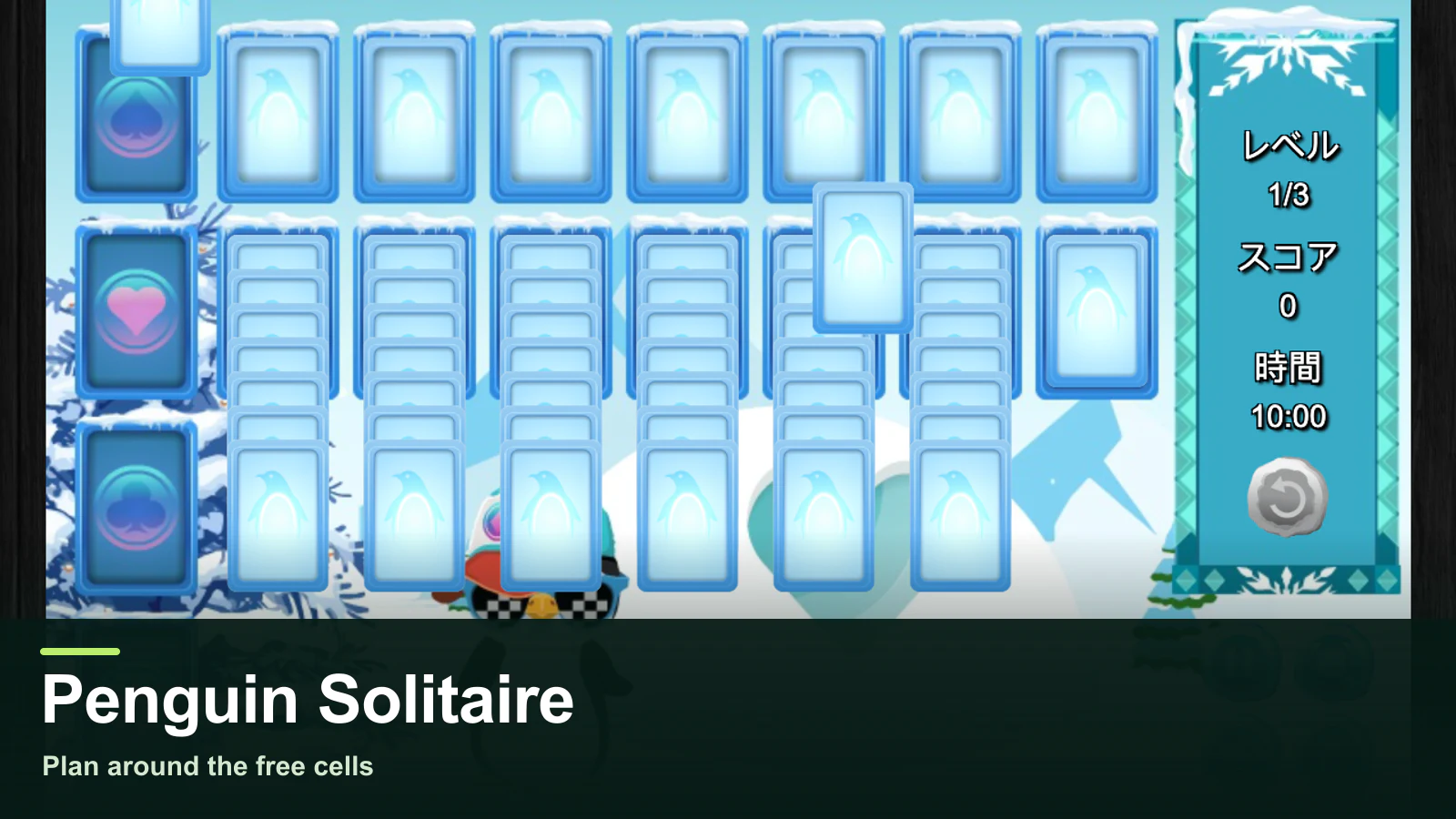
Penguin Solitaire is a planning game in which most cards are visible from the start. Instead of alternating colors, tableau cards build downward in the same suit, supported by a small number of free cells and a reserve pile. Because you can see so much of the layout, the challenge is not finding a hidden card but choosing an order that keeps the right receivers open.
A starting card often sets the foundation rank, with foundations building through a King-to-Ace cycle. The reserve exposes only its top card, so every move that releases it should be evaluated for the next card it uncovers. Clearing the reserve is useful only when the newly visible card can be placed safely.
A spade 8 can normally receive a spade 7, not a red 7. This greatly reduces the number of destinations compared with FreeCell. Short same-suit links are precious, but extending one blindly can bury the rank that a foundation or reserve needs next.
A free cell should hold a card that immediately enables another move: freeing the reserve, exposing a tableau lead, or joining a same-suit run. Decide how the stored card will leave the cell before you place it there. A cell that stays occupied by a low card can block a King or a long sequence later.
Parking the easiest card in a free cell, locking a long tableau column before the reserve is open, and sending every available foundation card upward can all remove future receivers. When two moves are legal, prefer the one that reveals a new card or preserves a route to the next reserve card.
FreeCell also rewards free-cell management, but its tableau uses alternating colors. Penguin uses same-suit columns, so each free cell is more constrained and each suit connection is more valuable. It feels like a visible-information puzzle with a much tighter set of destinations.
A free cell has its highest value when it turns a blocked reserve card into a useful move. For example, if moving a club 6 to a cell lets you place club 7 on a column and expose the reserve top, that is a complete plan. Moving the 6 merely because it fits in the cell is not. Before using a cell, identify where the stored card will return and which card becomes available in exchange.
Because the layout is visible, you can also trace a target card backwards. If a foundation needs a heart 9, find the heart 9, then look at the cards sitting above it and the receivers required to move them. This reverse path often identifies a better priority than simply extending the longest same-suit column. It also prevents the common mistake of locking a neat-looking sequence over a rank you need soon.
Penguin Solitaire is for players who prefer planning to guessing. The reserve and free cells create a deliberate, almost puzzle-like pace, while same-suit building makes every destination meaningful. If FreeCell appeals because all of the information is visible, Penguin offers a tighter variation in which suit order carries more weight.
Usually one card can be stored in each free cell. Follow the active game rules for the exact number of cells.
Many Penguin rulesets use a dealt starting rank and a cycle. Read the foundation display before planning your first move.
Loading comments...