How to play
- Tap or drag cards to the legal destinations shown in the game.
- Use the three cells for temporary storage only when a follow-up move is ready.
- Build foundation piles upward from Ace to King as the layout opens.
How to play
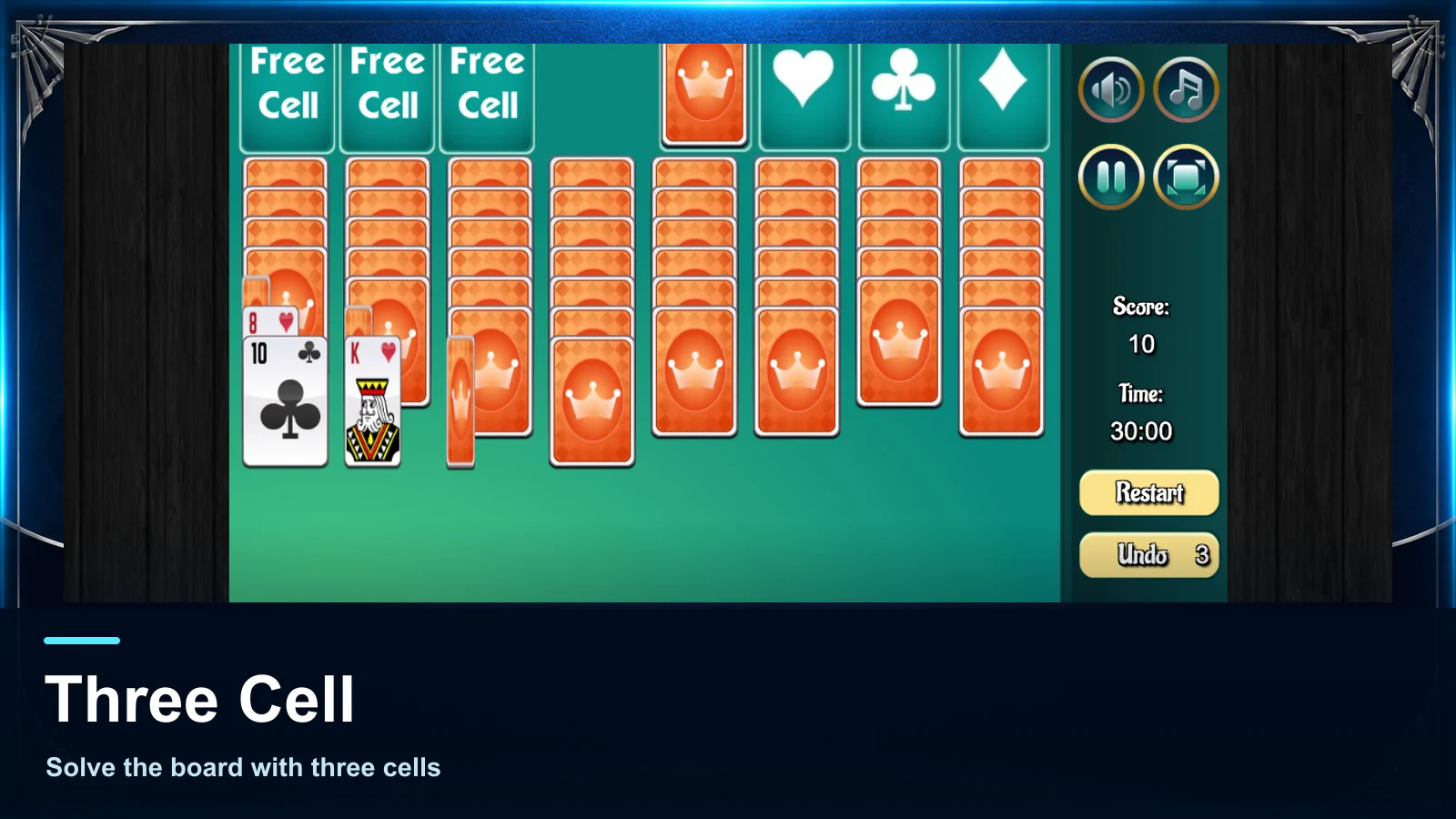
Three Cell Solitaire turns a simple idea into a compact planning puzzle: you have only three temporary cells to help untangle the tableau. That small limit makes every parked card important. Rather than moving cards simply because they fit, you look for transfers that reveal a low rank, create a receiver, or make the next move possible. It is an excellent choice when you want a short solitaire session with real tactical decisions.
With only three places for temporary storage, random parking quickly blocks the board. Before using a cell, decide what the next move will accomplish. Perhaps removing one card exposes an Ace, or perhaps it lets another column accept a useful card. If no follow-up is visible, save the space. The final available cell is especially valuable because it can enable a two-step rearrangement that would otherwise be impossible.
Begin by locating Aces, 2s, and 3s, together with the cards that cover them. Releasing a low rank can make the table lighter, but not every available foundation move is automatically safe. A card may still be needed as a landing place in the tableau. Compare the result after it leaves: if the move reveals a card or opens storage, it is usually helpful; if it removes the only receiver for another blocked card, wait.
Try to keep one cell empty for as long as the layout allows. A full set of cells can make the board look organized while leaving no way to exchange two blocked cards. Temporary storage works best when each card has an exit plan. Ask where it will return, what it will uncover, and whether a different card would create a better route. This pause prevents many mid-game dead ends.
Do not judge a move only by the size of the sequence it creates. Shortening a column is valuable when the newly visible card can feed a foundation or receive another card. Often the strongest move is the one that exposes information, not the one that produces the longest stack. Repeatedly moving the same card between cells consumes capacity without making the layout more useful.
When the board tightens, identify the next rank needed on each foundation. Find that rank in the tableau and work backward through the blockers above it. Then review the cards in your cells: could one have been parked in a different order? If Undo is available, test that alternate order. Three Cell Solitaire rewards careful rewinding because a single earlier choice can determine whether a key route remains open.
Players who enjoy the visible planning of FreeCell but want less working capacity will appreciate this variation. It is concise without being automatic. The three-cell limit gives each turn a clear question: which move creates the most useful space for the card that follows?
Count the temporary moves your plan needs before you begin. If it needs all three cells, make sure the final parked card immediately releases a route instead of becoming another blocker.
No. Keeping one open preserves your ability to make a second temporary transfer.
Trace the next foundation rank back through its blockers and try a different storage order.
Loading comments...