Controls
- Tap or drag face-up cards onto the next higher tableau rank.
- Move ordered same-suit groups when the board allows it.
- Check the tableau before dealing a stock row.
Controls
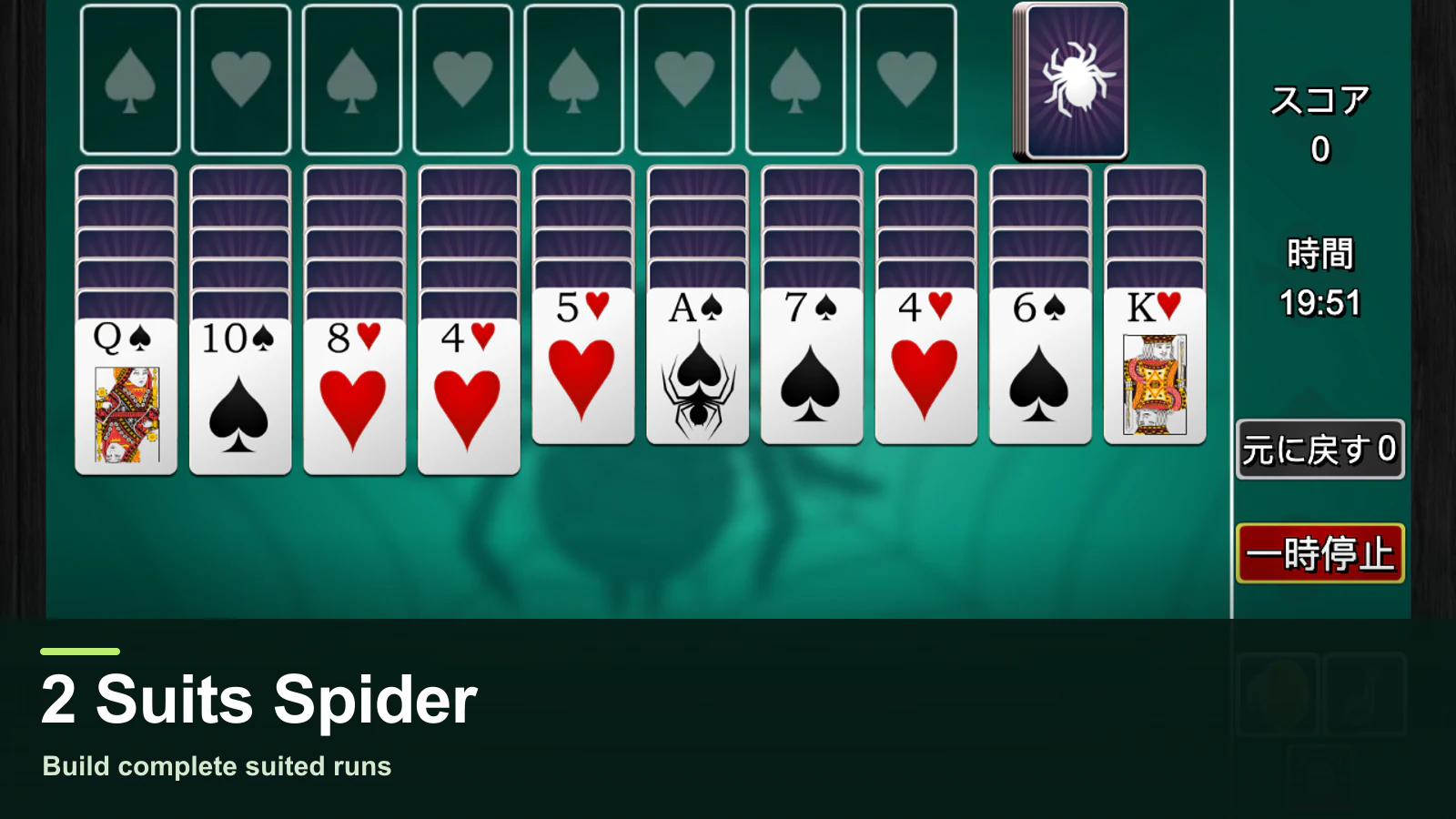
2 Suits Spider Solitaire asks you to organize ten tableau columns into complete same-suit runs from King to Ace. Rank order alone is not enough: mixed-suit descending cards can often sit together temporarily, but only a properly ordered same-suit section is a reliable movable unit. That distinction makes this a meaningful step up from one-suit Spider.
Every productive move must do more than create a legal descending stack. It should expose a face-down card, extend a same-suit section, or prepare an empty column for the next rearrangement. A mixed stack is useful working material, but it becomes a trap if it buries the ranks needed to join a same-suit run.
A stock deal places a new card on every column and can cover a useful structure. Treat it as a planned phase change, not a rescue button. Before dealing, look for a face-down card you can reveal, a same-suit segment you can join, and an empty column you can preserve. Those decisions determine whether the new row creates options or simply adds clutter.
An empty column is valuable because it lets you move a mixed sequence out of the way. Do not fill it just because a card can go there. Decide whether the space will reveal a card, join a suited run, or give the next stock row a landing plan. In the late game, a poorly used empty column can strand the King that should begin the final run.
Early in a game, reveal information. In the middle, preserve and connect same-suit sequences before you deal again. Near the end, protect near-complete runs and make sure the remaining Kings and Queens still have destinations. A move that continues for two turns is usually more useful than a move that only makes the layout look tidier.
Spider Solitaire changes difficulty with the number of suits in play. The two-suit version adds the need to untangle competing suit paths while keeping enough working space to expose hidden cards. It rewards deliberate sequencing more than fast dealing.
Suppose one column offers a move that joins a suited Q-J pair, while another move reveals a face-down card but creates a mixed sequence. The better choice depends on what each move leaves behind. If the suited pair can remain accessible after you expose the card, revealing information is usually stronger early in the game. If the reveal only produces another blocked card while the Q-J pair can accept a useful 10, preserve the suited connection first. The key question is not which stack becomes longer; it is which move gives the next move a clear destination.
Before a stock deal, make a quick inventory: count empty columns, identify the exposed Kings that can begin new working columns, and locate the shortest same-suit segments. This turns a vague feeling of being stuck into a concrete plan for the next row. If none of the current moves reveals a card or improves a suited segment, dealing can be reasonable. If one move does either, take it before adding ten more cards to the board.
Choose this version after one-suit Spider starts to feel predictable, but before you want the full complexity of four suits. It keeps the familiar ten-column rhythm while making suit order matter on every long move. Players who enjoy organizing a crowded board and revisiting a decision after an Undo will find more to work with here than in a quick one-pass solitaire game.
Movement rules vary by edition, but same-suit descending sections are the dependable movable structures. Follow the live board rule when it differs.
After you have checked current tableau moves and know how the new row can be handled.
Loading comments...